
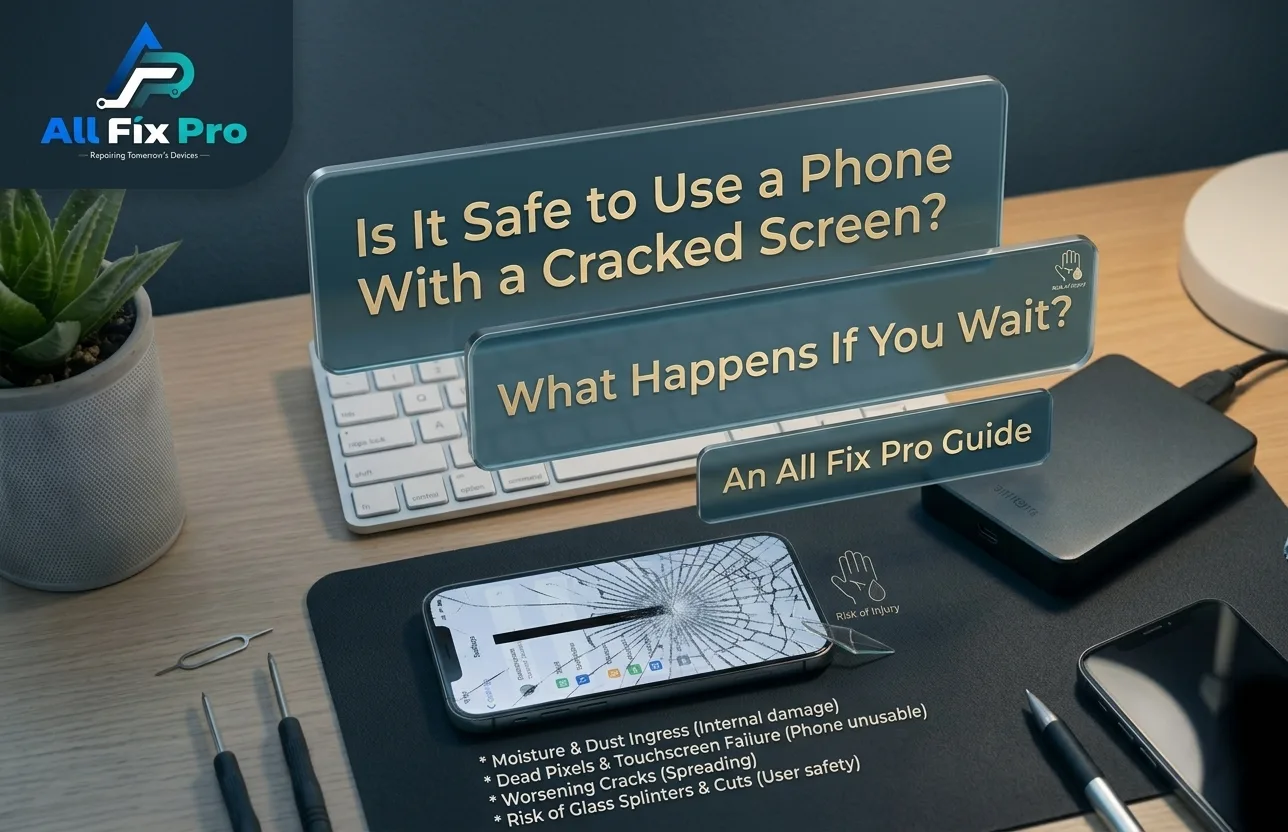
A small crack in the corner feels harmless, especially when the phone still works. So you keep scrolling and tell yourself you’ll deal with it next month. Sometimes that works out. Often it doesn’t. Here is what a damaged display risks and how to decide whether to wait.
Cracked Phone Screen: What Is Actually Damaged?
A cracked phone screen usually means the top glass has broken. Underneath sit the display layers and the touch sensor, and an impact that breaks the glass can harm them too. That is why some cracks look cosmetic but cause touch glitches, dead spots or colored lines later. If you already see lines, our guide on lines on a phone screen can help you narrow down the cause.
Is It Safe to Use a Phone With a Cracked Screen?
For a short time, a hairline crack is usually manageable. The honest answer depends on the damage. A cracked screen that is smooth, stable and fully responsive carries lower risk than one with loose shards, deep fractures or spreading lines. Treat the crack as a countdown rather than a permanent condition. Use the phone carefully until you can book a fix, and don’t ignore warning signs like flickering, sharp edges or a screen that reacts on its own.
The Safety Risks of a Broken Phone Screen
A broken phone screen can leave tiny glass splinters along the cracks. They can catch your fingertips, and holding the phone against your face during calls puts your skin in contact with damaged glass. Small shards can also flake off over time. If you notice rough patches, stop pressing on them and cover the area temporarily until the repair.
Cracked Screen Water Damage
Moisture is the risk people underestimate. Cracks can break the seal that helps keep liquid and dust out, so rain, sweat or a splash can reach the internals. That is how a cracked screen water damage problem begins, and it often shows up days later as a flickering display or a phone that won’t charge. If your phone has already gotten wet, follow our dropped phone in water guide right away.
What Happens If You Wait: How a Cracked iPhone Screen Gets Worse
A cracked iPhone screen rarely stays the same. Pocket pressure, temperature changes and daily taps stress the glass, so cracks lengthen and branch out. Touch problems tend to follow. Here is the usual pattern:
- Hairline cracks widen and multiply
- Dust and moisture enter through the gaps
- Touch becomes unreliable in some areas
- Color lines or dark patches appear
- Repair costs can rise if other parts get damaged
Why Touch Fails and Which Features Are at Risk
Touch stops working when the digitizer, the layer that senses your finger, is cut or pressed out of alignment. You may also see ghost taps. Damage near the top can interfere with the front camera, sensors and Face ID. Fingerprint readers and cameras can be affected too, depending on where the damage sits. If a feature acts up after a crack, treat it as a reason to book soon.
Can You Tape or Cover a Cracked Screen?
Tape or a fresh protector can hold loose glass in place and reduce cuts, but it is a short-term patch only. It won’t restore the seal or fix touch damage. Also, a cracked protector is not the same as a cracked screen, so check by peeling the protector back at a corner. Once your display is repaired, protect it with a tempered glass protector.
Cracked Screen Repair: Repair or Replace?
Cracked screen repair is usually the sensible choice when the phone is otherwise healthy. If the phone is very old or has other faults, weigh your options with our guide on repair or replace phone. Thinking about doing it yourself? Compare DIY screen repair vs professional repair before you start.
Cracked Phone Screen Repair Stockton: Local Options
If you need cracked phone screen repair Stockton residents can rely on, look for clear quotes, a stated warranty and parts the shop will name. If budget is tight, ask about Affordable Cracked Screen Repair Stockton options and what panel type each price includes. Need speed? Ask whether Same-Day Phone Screen Replacement Stockton appointments are available for your model. Browse our phone repair service page, check the pricing page, then book your repair.
Frequently Asked Questions
Is it safe to use a phone with a cracked screen?
Briefly, yes, if the crack is minor and the touch works normally. Deep cracks, loose glass or spreading damage make it unsafe, so repair soon.
Can a cracked screen cut my fingers or face?
Yes. Cracked glass can leave sharp edges or tiny splinters, especially during calls or when swiping across the damaged area.
Will a cracked screen get worse if I wait?
Usually. Daily pressure, drops and temperature changes make cracks spread, and touch problems often follow.
Can water or dust get in through a cracked screen?
Yes. Cracks can weaken the seal around the display, letting moisture and dust reach internal parts.
Can a cracked screen damage the phone’s internal parts?
It can. Moisture and debris entering through cracks may harm the display connector, battery area or circuit board over time.
Why does the touch stop working on a cracked screen?
The touch layer under the glass may be cut, misaligned or exposed to moisture, causing dead zones or ghost taps.
Is a cracked screen protector the same as a cracked screen?
No. A cracked protector absorbed the impact. Lift a corner to check whether the glass underneath is damaged.
Can I put tape or a screen protector over a cracked screen?
Yes, as a temporary measure to hold glass in place. It won’t fix the damage or restore water protection.
Can a cracked screen affect Face ID, fingerprint or camera?
It can, if the damage is near those sensors or presses on internal parts. Test them regularly while you wait.
When should I replace the screen instead of waiting?
Replace it when cracks spread, touch misbehaves, glass flakes, lines appear or moisture may have entered.
Conclusion
A cracked phone screen may feel like a minor annoyance, but it tends to grow into a bigger problem. Use the phone cautiously, protect the glass temporarily, and book a repair before moisture or touch faults appear. Have questions? Contact us.